Slow Mornings vs Hustle Culture: Choosing Peace Without Losing Ambition
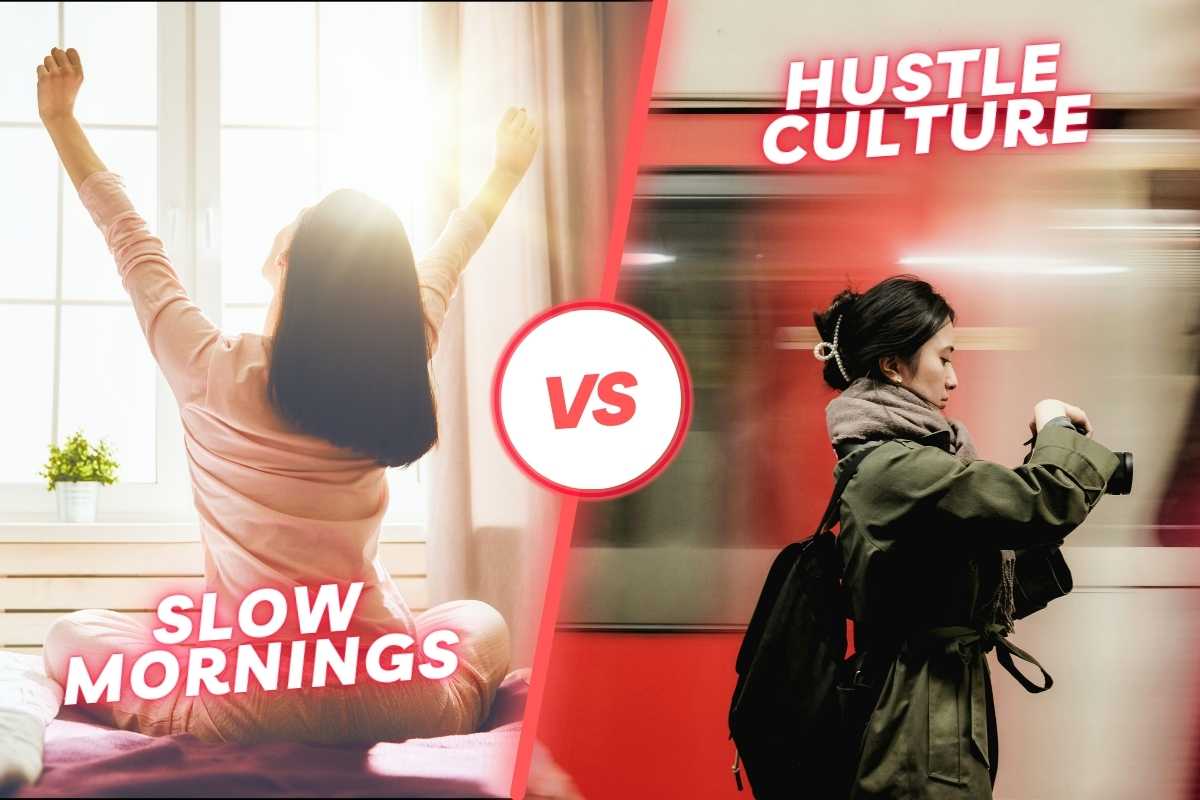
The “hustle hard” memes are flying around. The 5 a.m alarm clock. The podcast on “billionaires work while you sleep”. Several LinkedIn posts glorifying the hustle life and social media telling you that if you’re not grinding before sunrise, you’re already behind. The hustle culture is every and people are flexing it big time.
But a rebellion sparked up, and that was against the hustle life. That’s the slow mornings; no rush, no panic, soft life, the one that promotes love before the world starts demanding things from you.
Now, which one do you go for? Which one makes you live better, work smarter, without compromising productivity? Let’s explore in depth.
What Hustle Culture Really Means
Hustle culture isn’t just about working hard. Working hard isn’t the problem. The problem is the belief that your value is directly tied to how busy you are.
It tells you:
- Sleep is optional
- Rest is lazy
- Burnout is a badge of honor
- And slowing down means you’re falling behind

It glamorizes exhaustion. It turns “busy” into a personality trait. And it makes mornings feel like a race you didn’t sign up for.
Although there is no denying that hustle culture can produce results. Businesses get built. Careers move fast. Goals get checked off.
But here’s the part people don’t post online: it also produces anxiety, chronic stress, burnout, and a constant feeling that you’re never doing enough. Even when you are.
Let’s not forget that relationships also suffer, and there are various studies warning hustlers of the health issues, such as anxiety and even depression, to deal with. And when you work that hard, are you really, I mean, really happy?
Also read: Love Island All Stars: Why This Reality Show Is Really a Business Power Play
What Are Slow Mornings, Really?
Don’t get it wrong. Slow mornings don’t mean you quit your job and sip tea for three hours while journaling about the world.
Slow mornings are about intention, not laziness. It’s the idea that how you start your day shapes how you experience it. Instead of launching straight into pressure, you give yourself a soft, calm morning that will serve as the basis of a fruitful day.
A slow morning might look like:
- Waking up without immediately checking your phone
- Sitting quietly for a few minutes before doing anything
- Stretching, praying, journaling, or just staring out the window
- Eating breakfast without multitasking
- Letting your mind wake up before your obligations do

What is it about slow mornings?
The thing is, your brain is most impressionable in the first moments after waking up. When you wake up stressed, rushed, and overwhelmed, your nervous system carries that energy into the rest of the day. Your body thinks it’s under threat, even if the “threat” is just emails and deadlines.
Slow mornings help regulate your nervous system. They tell your brain, “We’re safe. We’re okay. We can move with clarity instead of panic.” And that changes everything.
Slow mornings and work-life balance
People are popularizing slow mornings and how a soft life can make you achieve success. There are millions of #softlife on TikTok and Instagram, and influencers like Gabrielle Judge are popularizing “the lazy jobs’ that can still help achieve your financial goals. These are jobs that allow you to escape the hustle life, work remotely, while still being able to travel the world, have fun with loved ones, and prioritize mental wellbeing. These people believe that you don’t have to hustle hard to make money, and job satisfaction and fulfillment beat working hard any day.
Hustle Culture vs Slow Mornings: The Difference
This isn’t about choosing one but about understanding what each approach does to you.
Hustle Culture Focuses On:
- Speed
- Output
- External validation
- Constant urgency
Slow Mornings Focus On:
- Presence
- Mental clarity
- Emotional regulation
- Sustainable energy
Hustle culture asks, “How much can you produce today?” Slow mornings ask, “How do you want to feel today?”
Both questions matter. But only one acknowledges that you’re a human being, not a machine.
Why More People Are Choosing Slow Mornings
There’s a reason slow living content keeps growing online. People are tired:
- Feeling anxious before 8 a.m.
- Starting every day already behind
- Living on caffeine and adrenaline
- Achieving goals but feeling empty
Slow mornings offer something hustle culture rarely does, and that is peace. This doesn’t mean you are letting go of ambition; you are simply refining it.
People are realizing you don’t have to suffer to succeed. You don’t have to burn out to prove you’re serious. You can build a meaningful life without being in survival mode every day. And that too is important.
Do Slow Mornings Kill Productivity?
Slow mornings do not make you unproductive. In fact, they often do the opposite.
When you start your day calm and grounded:
- You make better decisions
- You focus longer
- You react less emotionally
- You waste less energy on stress
You might work fewer frantic hours, but the work you do is cleaner, sharper, and more intentional. Productivity isn’t about how fast you start. It’s about how well you sustain.
Tips for Incorporating Slow Mornings Without Sacrificing Ambitions
You don’t need total lifestyle changes; small shifts will make a difference.

1. Wake Up 15 Minutes Earlier
Not an hour. Not two.
Fifteen minutes is enough to:
- Sit quietly
- Breathe
- Stretch
- Mentally prepare for the day
This will go a long way toward a productive day.
2. Don’t Touch Your Phone Immediately
This one’s hard, but checking your phone first thing floods your brain with other people’s priorities before you’ve even met your own.
Try this instead:
- Wait 10–20 minutes before checking notifications
- Let your mind wake up without comparison, news, or urgency
3. Create a Simple Morning Routine
It is one thing you do every morning that allows you to calm down.
It could be:
- Making your bed slowly
- Drinking water in silence
- Saying a short prayer
- Writing one sentence in a journal
4. Stop Scheduling Mornings Like Emergencies
If everything is urgent at 7 a.m., nothing actually is.
Avoid:
- Back-to-back early meetings
- Overloading your first hour
- Starting the day already behind schedule
Protect your mornings like you protect important appointments because they are.
5. Redefine What “Successful” Mornings Look Like
A successful morning doesn’t mean:
- Finishing five tasks
- Working before sunrise
- Beating everyone else to productivity
Sometimes, success is being mindful and present at the moment, eating properly, or leaving the house without feeling anxious.
Can Slow Mornings and Ambition Coexist?
Absolutely. This isn’t a battle between being relaxed and being driven. It’s about balance.
You can:
- Want more from life and protect your peace
- Work hard and rest well
- Build something meaningful without losing yourself
Slow mornings don’t make you less ambitious. They make your ambition sustainable. And sustainability is what actually lasts.
Why You Should Start Soft
There’s something about starting your day gently in a loud world. It’s choosing to move with intention instead of pressure. To listen to your body instead of ignoring it. To build a life that feels good is not just one that looks impressive.
You don’t need to quit hustle culture overnight. You just need to stop letting it control how you wake up and work. Afterall, there will forever be work to do, but you won’t live forever.